360 Liposuction Results & Surgical Planning | Dr. Furkan Certel
Dr. Furkan Certel explains how surgical planning influences 360 liposuction results, body proportions, and long-term satisfaction with natural-looking contours.
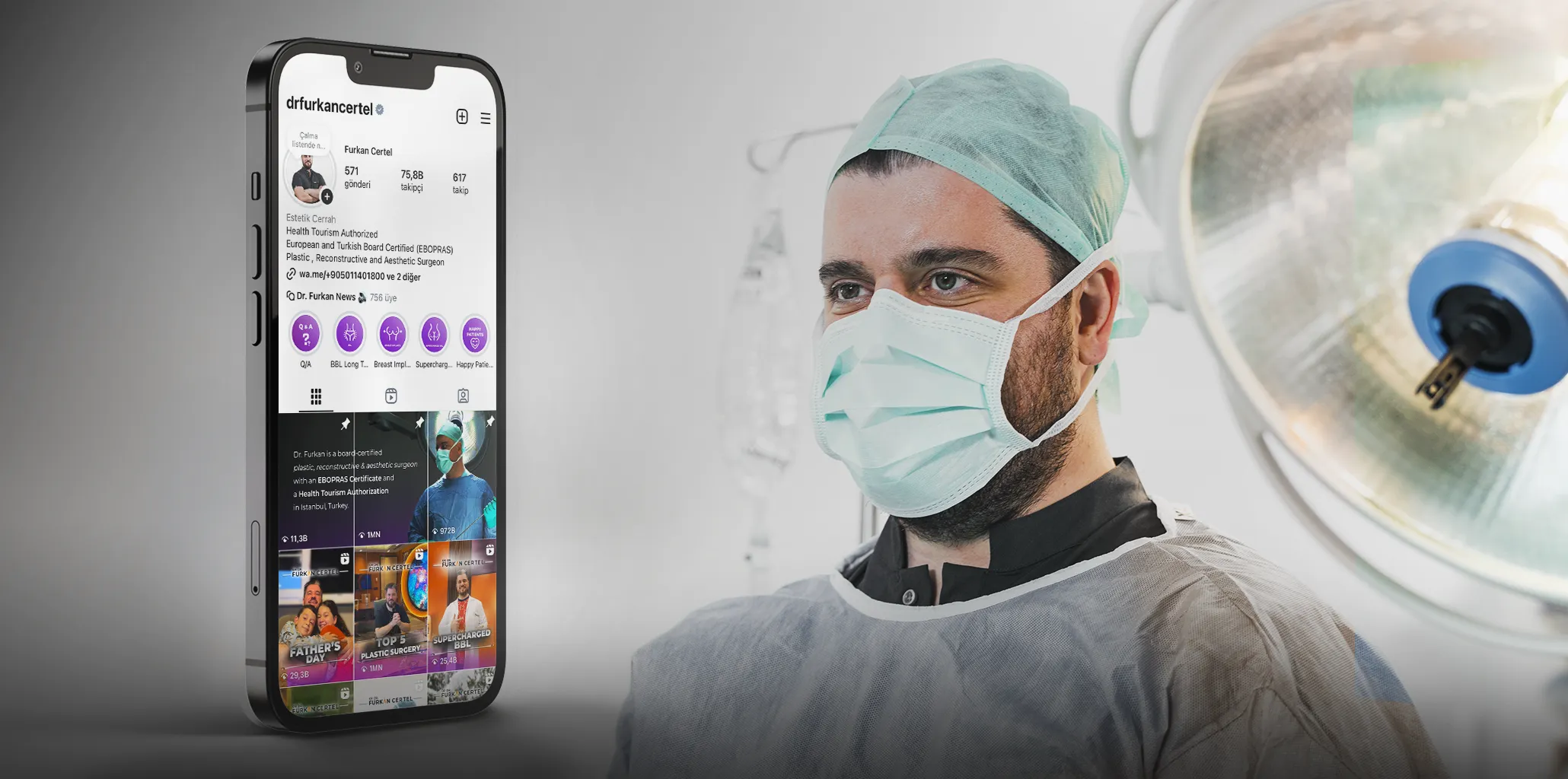
360 Liposuction Results: How Surgical Planning Shapes Natural Body Contours
Many patients focus on results, but few realize that those results are determined long before surgery begins.
In 360 liposuction, outcomes are not defined by technique alone.
They are shaped by planning, proportion, and restraint.
In this article, Dr. Furkan Certel explains how surgical planning directly influences 360 liposuction results — and why thoughtful preparation is essential for natural, long-term satisfaction.
What Defines a “Good” 360 Liposuction Result?
A successful 360 liposuction result is not dramatic or exaggerated.
Instead, it should:
- Look natural from every angle
- Maintain smooth transitions between treated areas
- Respect the patient’s body structure
- Age well over time
True success is when the body looks balanced — not “operated on.”
Planning the Waist as a Complete Unit
One of the most important principles in Dr. Furkan Certel’s approach is treating the waist as a single, continuous structure.
This means evaluating:
- Front and side profiles
- Back contour and fat distribution
- Natural curves and body lines
By planning the entire circumference together, harmony is created rather than isolated improvements.
Fat Removal vs. Body Sculpting
Removing fat is only one part of the process.
Surgical planning focuses on:
- Where fat should be removed
- How much fat should be removed
- Where fat should be preserved for smooth transitions
Over-removal can lead to irregularities and unnatural contours.
Precision and balance are far more important than aggressive reduction.
The Role of Skin Quality in Final Results
Skin plays a major role in how results appear after surgery.
During planning, the following factors are evaluated:
- Skin elasticity
- Skin thickness
- The skin’s ability to retract
Good skin quality allows smoother and more refined outcomes.
When elasticity is reduced, expectations must be adjusted and planning becomes even more critical.
Symmetry, Proportion, and Natural Aesthetics
Every body has natural asymmetries.
Rather than forcing perfect symmetry, the goal is to:
- Improve overall proportion
- Enhance natural curves
- Avoid sharp or artificial lines
This approach leads to results that feel authentic and comfortable for the patient.
Healing: The Final Stage of Results
Surgical planning does not end in the operating room.
Final results develop through:
- Weeks of swelling reduction
- Months of tissue adaptation
- Gradual skin adjustment
Patients who understand this process tend to feel more confident and satisfied during recovery.
Why Experience Matters in 360 Liposuction Results
360 liposuction requires more than technical skill.
It demands:
- Strong spatial awareness
- Precise technical control
- Advanced aesthetic judgment
Experience allows a surgeon to anticipate how tissues will heal — not just immediately after surgery, but months and years later.
Frequently Asked Questions (FAQ)
- When will I see final 360 liposuction results?
Final results usually appear between 3 and 6 months after surgery. - Can results look uneven at first?
Yes. Temporary swelling can cause unevenness during early healing. - Do results continue to improve over time?
Yes. As tissues settle and skin adapts, contours often refine gradually. - Will weight changes affect my results?
Significant weight changes can alter results. Stable weight helps maintain long-term outcomes. - Are natural results always subtle?
Natural results can still be noticeable — they simply look balanced and proportionate.
Final Thoughts
Beautiful 360 liposuction results are never accidental.
They are created through planning, precision, and respect for the body’s natural structure.
When surgical technique is guided by aesthetic judgment, the outcome feels natural, sustainable, and confidence-enhancing.
The responsibility of the surgeon is not only to perform surgery, but to ensure that results make sense — today, tomorrow, and years from now.
 https://www.drfurkancertel.com/wp-content/uploads/2026/03/Best-Country-for-Rhinoplasty-Surgeons-Guide.webp
720
1280
voila-editor voila-editor
https://www.drfurkancertel.com/wp-content/uploads/2026/02/FC_HEALTHTURKIYE_LOGO-845x156.png
voila-editor voila-editor2026-03-30 14:42:442026-03-30 14:39:04Best Country for Rhinoplasty: Surgeon’s Guide
https://www.drfurkancertel.com/wp-content/uploads/2026/03/Best-Country-for-Rhinoplasty-Surgeons-Guide.webp
720
1280
voila-editor voila-editor
https://www.drfurkancertel.com/wp-content/uploads/2026/02/FC_HEALTHTURKIYE_LOGO-845x156.png
voila-editor voila-editor2026-03-30 14:42:442026-03-30 14:39:04Best Country for Rhinoplasty: Surgeon’s Guide https://www.drfurkancertel.com/wp-content/uploads/2026/03/Rhinoplasty-After-40-Is-Age-Too-Late-for-a-Nose-Job_-1.webp
720
1280
voila-editor voila-editor
https://www.drfurkancertel.com/wp-content/uploads/2026/02/FC_HEALTHTURKIYE_LOGO-845x156.png
voila-editor voila-editor2026-03-26 14:20:322026-03-26 14:09:31Rhinoplasty After 40: Is Age Too Late for a Nose Job?
https://www.drfurkancertel.com/wp-content/uploads/2026/03/Rhinoplasty-After-40-Is-Age-Too-Late-for-a-Nose-Job_-1.webp
720
1280
voila-editor voila-editor
https://www.drfurkancertel.com/wp-content/uploads/2026/02/FC_HEALTHTURKIYE_LOGO-845x156.png
voila-editor voila-editor2026-03-26 14:20:322026-03-26 14:09:31Rhinoplasty After 40: Is Age Too Late for a Nose Job? https://www.drfurkancertel.com/wp-content/uploads/2026/03/Rhinoplasty-Surgeon-in-Turkey.webp
720
1280
voila-editor voila-editor
https://www.drfurkancertel.com/wp-content/uploads/2026/02/FC_HEALTHTURKIYE_LOGO-845x156.png
voila-editor voila-editor2026-03-23 10:34:062026-03-23 10:30:27Rhinoplasty Surgeon in Turkey
https://www.drfurkancertel.com/wp-content/uploads/2026/03/Rhinoplasty-Surgeon-in-Turkey.webp
720
1280
voila-editor voila-editor
https://www.drfurkancertel.com/wp-content/uploads/2026/02/FC_HEALTHTURKIYE_LOGO-845x156.png
voila-editor voila-editor2026-03-23 10:34:062026-03-23 10:30:27Rhinoplasty Surgeon in Turkey